SCIENCE WITHOUT FILTER – Episode 4 of the Institute’s Podcast: The Link Between Smartphone Use and Children’s Cognitive Abilities
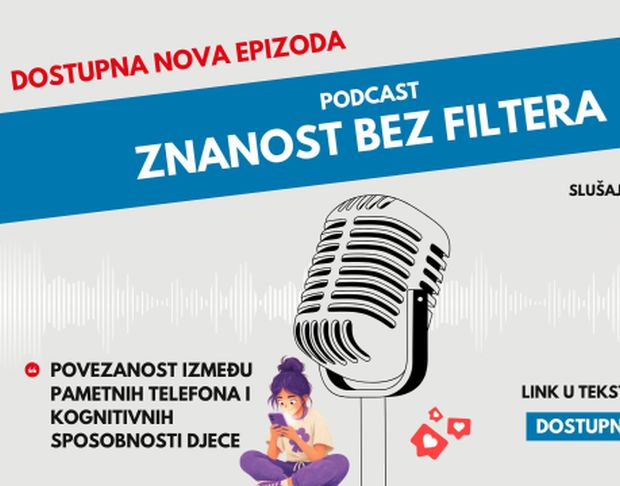
Following a proposal for science popularisation activities put forward by the Pilar Institute’s Science Popularisation Committee, the Institute launched its podcast, SCIENCE WITHOUT FILTER, in late September 2025. The podcast introduces a new form of digital content to support the Institute’s strategic goal of popularising science and enhancing its public visibility
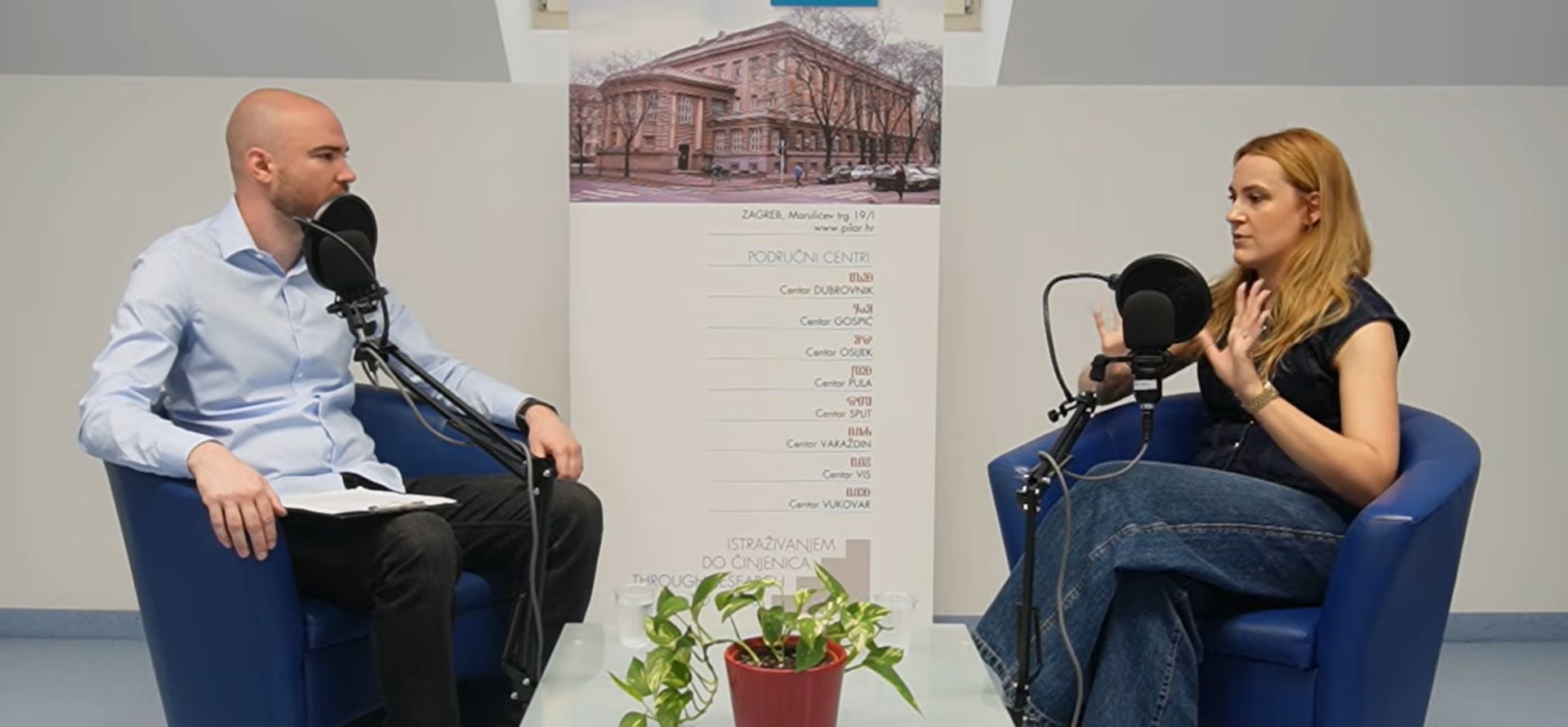
How, and to what extent, is smartphone use related to children’s cognitive abilities? In our fourth episode, we take a scientific look at digital device use in childhood and its relationship with cognitive development.
Joining the discussion:
🎙️ Guest: Maja Kućar Kveder, psychologist, Ivo Pilar Institute of Social Sciences
Maja Kućar Kveder holds a master’s degree in psychology and is a research assistant at the Pilar Institute. She has contributed to three scientific research projects and is currently a member of the TEEN-WELL project team. Her work at the Institute has primarily focused on developmental psychology, particularly the cognitive aspects of development in children and young people. Her main research interests concern the relationship between digital technology and cognitive functioning, especially the link between smartphone use and executive functions. This is also the focus of her doctoral dissertation. She is an external teaching associate at the Faculty of Organization and Informatics, University of Zagreb, and at University North, where she attained the teaching rank of lecturer in 2023. She has attended various workshops and training courses on advanced statistical analyses and presented her research at numerous national and international scientific conferences. To date, she has published around ten scientific papers in international journals.
🎧 Host: Josip Razum, PhD, psychologist, Ivo Pilar Institute of Social Sciences
Josip Razum, PhD, is a research associate in psychology at the Pilar Institute. His research interests include clinical and health psychology, particularly depressive symptoms and their treatment. His work uses advanced research methods, such as experience sampling. His doctoral research examined the effects of video gaming on the well-being of adolescents who spend substantial amounts of time gaming. He has participated in several research projects, presented his work at numerous conferences and published more than twenty scientific papers, which can be accessed here.
Watch the episode on YouTube: https://www.youtube.com/watch?v=jtBihAX9TDg