A new book published by the Pilar Institute: Mislav Gabelica, PRIEST AND POLITICIAN JURAJ TOMAC (1866 – 1930)
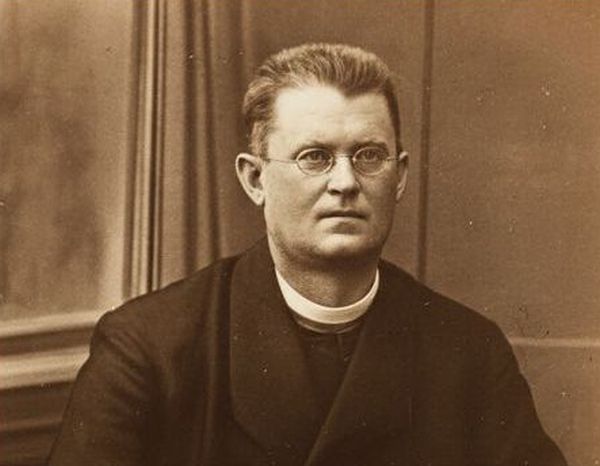
As the 53rd book of the Studije /Studies/ Series , the study of Mislav Gabelica, PhD, SVEĆENIK I POLITIČAR JURAJ TOMAC (1866. – 1930.) / PRIEST AND POLITICIAN JURAJ TOMAC (1866 – 1930) published by the Ivo Pilar Institute of Social Sciences
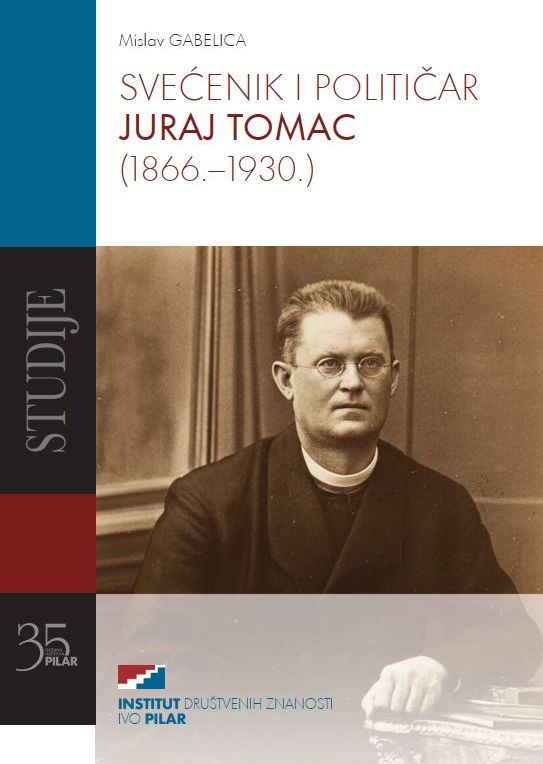
Author: Mislav Gabelica
Title in English: PRIEST AND POLITICIAN JURAJ TOMAC (1866 – 1930)
Series: STUDIES – Book 53
Publisher: Ivo Pilar Institute of Social Sciences
Place of publication & number of pages: Zagreb, 2026 – 216 p.
ISBN 978-953-8404-52-8
From reviews
The book Priest and Politician Juraj Tomac (1866–1930) provides an argumentative and comprehensive overview of the political and social activities of a prominent and committed individual at local levels of activity, and at a time of profound state, legal and political changes in Croatia from the end of the 19th century until the introduction of the monarchist Yugoslav dictatorship. It represents an important contribution to a series of delicate phenomena of recent Croatian history, such as relations towards Serbs and the Serbian state idea, the role of religion and priests in politics, the relationship between liberalism and conservatism, political relations between Radić’s Croatian Peasant Movement and Catholic priests in smaller rural communities, the emergence of anti-Semitism and relations within the Pure Party of Rights and the Croatian Party of Rights. Due to all of the above, this work represents an important contribution to Croatian political and social history of the late 19th and the first half of the 20th century, and equally at the state and regional levels of activity.
Ivica Miškulin, PhD, Catholic University of Croatia
The author pays particular attention to Tomac’s criticism of Yugoslavism, to which he contrasts the Starčevićian interpretation of Croatian state law. In doing so, he seeks to show that certain phenomena in Croatian political history should also be viewed as an expression of the conflict between political ideologies and party affiliations that, at a certain historical moment, are seeking a way to confirm and legitimize their demands. In addition, this text provides a better insight into social history because the author sheds light on the situation in the places where Tomac worked, especially in Međimurje and Moslavina, where his cooperation and influence on the local peasantry were evident. This correlation reflects the relevance of topics that examine the relationship between representatives of the eminent nationalist movement, which is faced with the failure to fulfill its national demands, and the other poles of the political scene, especially those who rise to ruling positions. It can be concluded that in such complex circumstances, the author clearly perceives and interprets the sequence of events as the main determinants of Tomac’s political activity from the aspect of historiography.
Stjepan Matković, PhD, Croatian Institute of History