The book Croatians in America by Vladimir Novak presented at the Pilar Institute; Zagreb, 12/05/2026
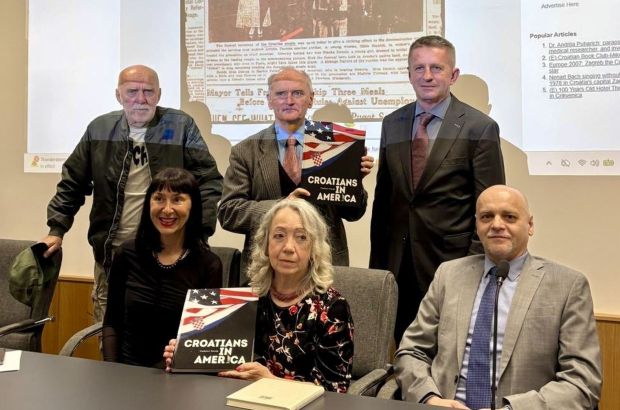
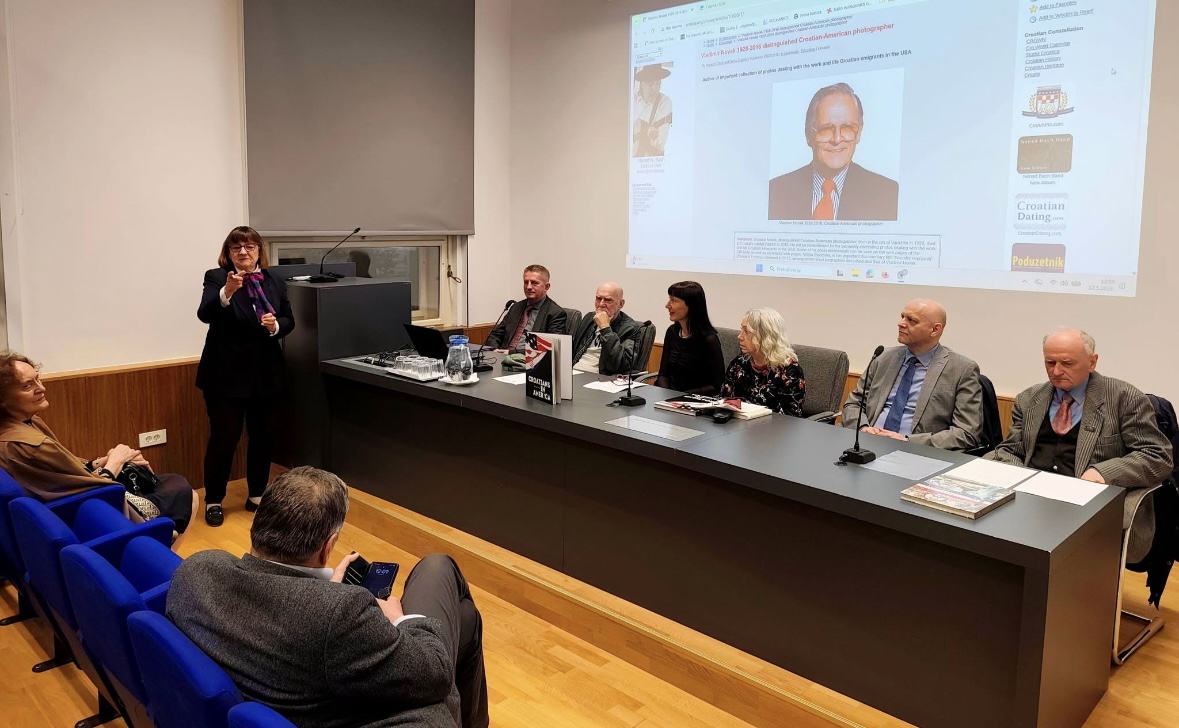
On May 12, 2026, the promotion of the book Croatians in America by Vladimir Novak, a valuable work dedicated to the history of Croatian emigration in the United States of America and the contribution of Croatian emigrants to American society, was held at the Pilar Institute Headquarters in Zagreb
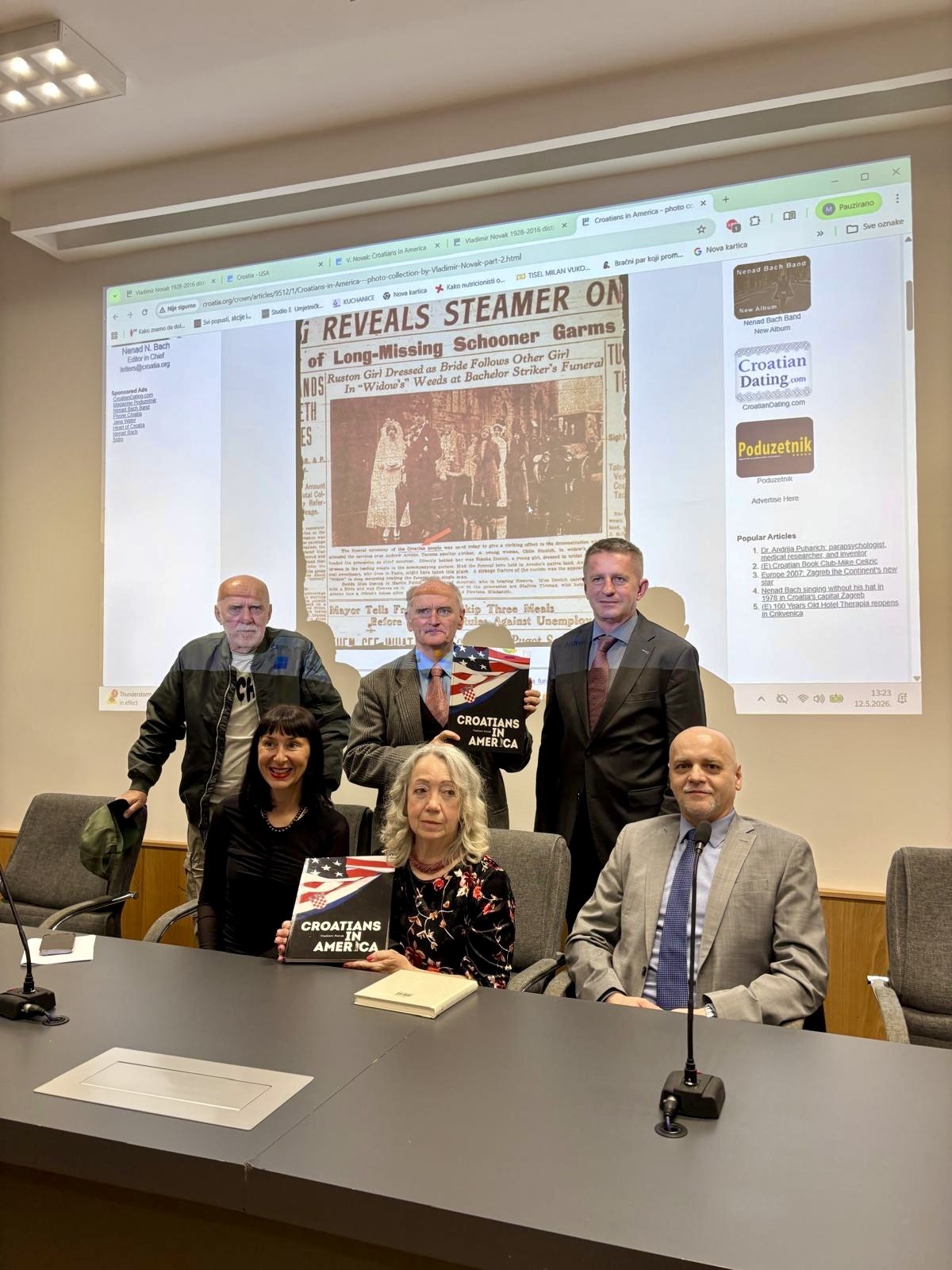
The audience was addressed by Prof. Željko Holjevac, PhD, Director of the Pilar Institute, Rebeka Mesarić Žabčić, PhD, Milan Bošnjak, PhD, from the Central State Office for Croats Abroad, Tuga Tarle, PhD, Stjepan Šterc, PhD, and Darko Žubrinić, PhD, who is also one of the most deserving of the promotion and presentation of this important book to the Croatian public. In her introductory remarks, Rebeka Mesarić Žabčić, PhD, spoke about the history of Croatian emigration to the USA – from the first waves of emigration to contemporary migration processes, and presented part of the research conducted within the project Dynamics and Challenges of Migration, Re-migration and Immigration in the Republic of Croatia – DinamiRH, which she is the leader of.
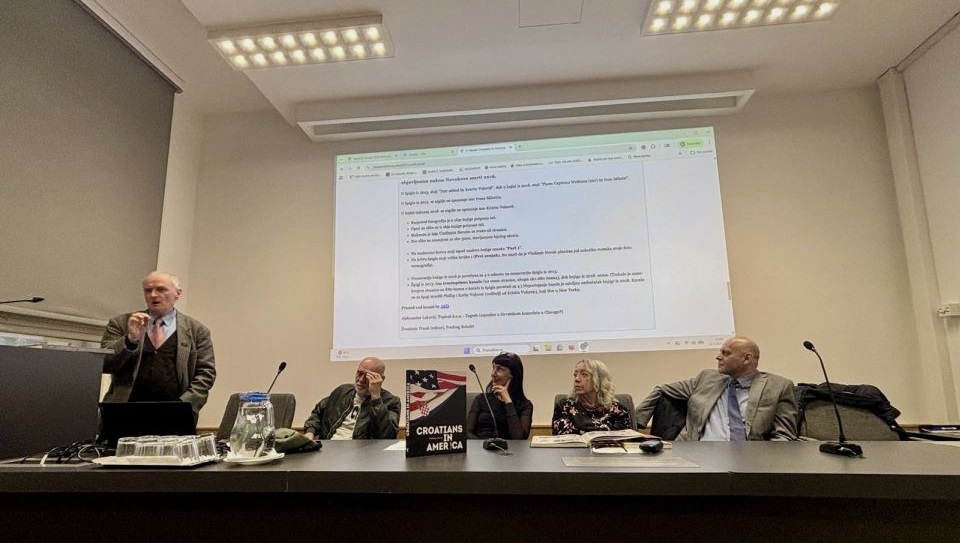
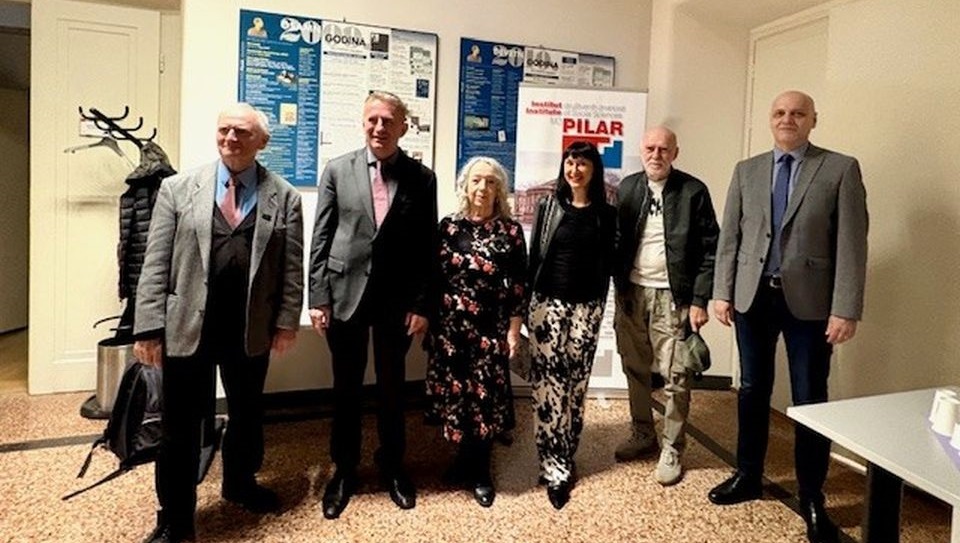
The welcoming remarks to the distinguished guests and book presenters were delivered by Ms. Zdravka Bušić, envoy of the President of the Croatian Parliament and president of the Parliamentary Committee for Croats Outside the Republic of Croatia, who herself lived in the United States of America for many years. On that occasion, she praised the publication and presentation of this valuable publication and emphasized the importance of preserving the history of Croatian emigration and the connection between the homeland and emigrant Croatia.
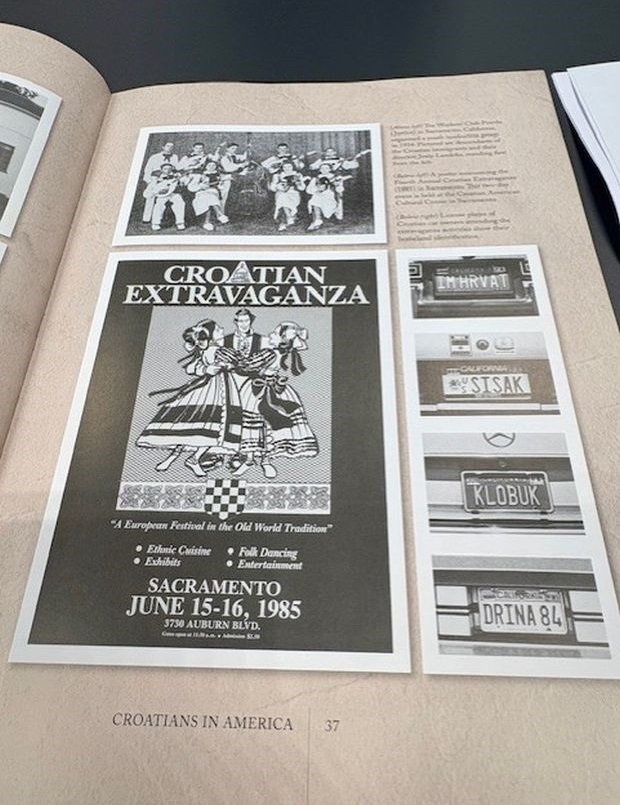
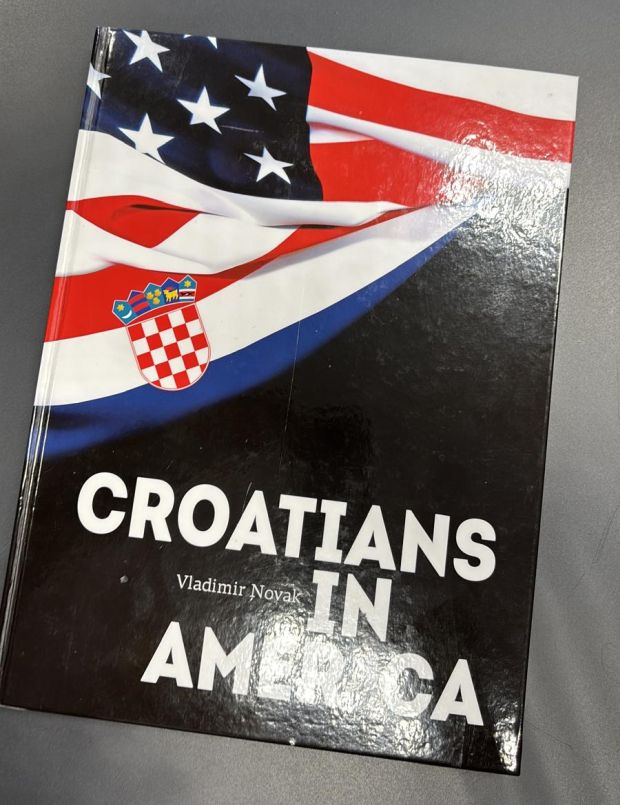
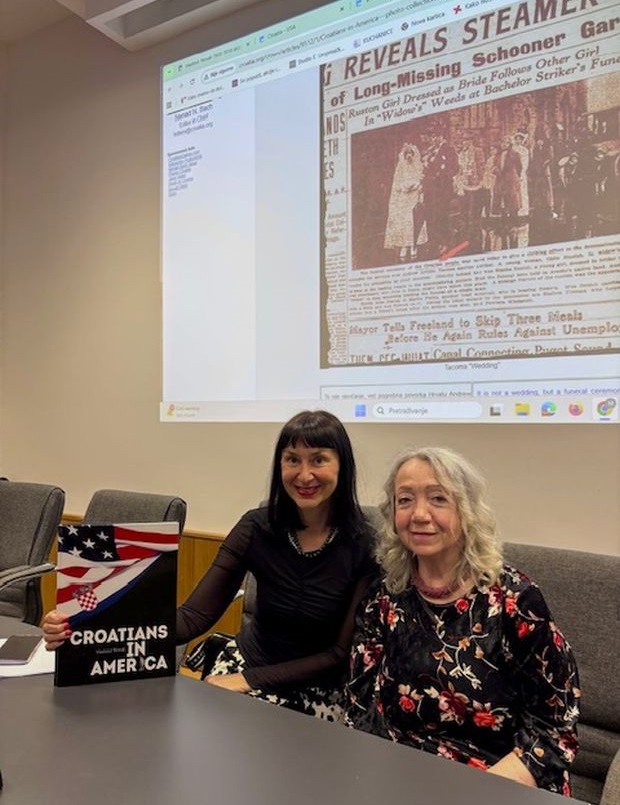
The book Croatians in America by Vladimir Novak provides an overview of the history of the Croatian community in America, its social, cultural and economic development, and the important contribution of Croatian emigrants to American society through various historical periods.
Vladimir Novak has left a valuable mark in the study of Croatian emigration, especially the Croatian community in the United States. Through his research and publicistic work, he has contributed to the preservation of the historical memory of Croatian emigrants and to the strengthening of the connection between the homeland and the emigrant Croatia. Such research is of exceptional importance because it contributes to a better understanding of the history of Croatian migrations, the identity of Croatian communities outside the homeland, and their role in preserving Croatian culture, language, and national consciousness across generations. It also represents an important foundation for further scientific research and the development of cooperation between Croatia and the Croatian emigrant community around the world.