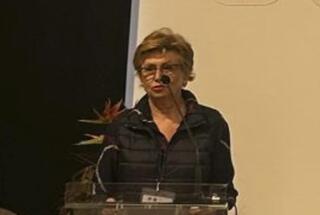
Lynette Šikić-Mićanović, PhD, participated in a panel discussion entitled “Promoting Homelessness Prevention in the City of Zagreb”; Zagreb, 14/04/2026
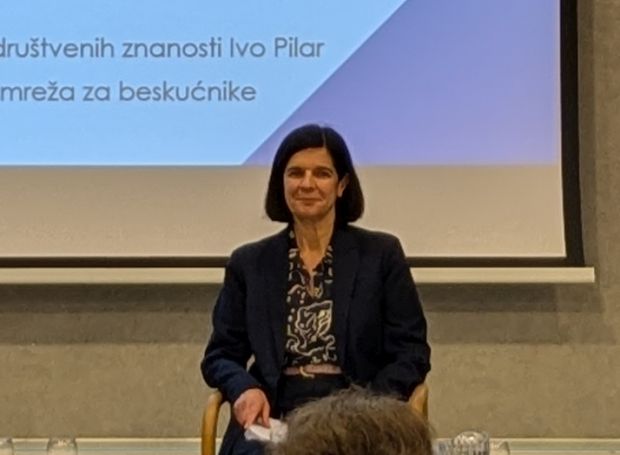
The panel discussion was held at the House of Europe in Zagreb and organized by CERANEO – Centre for the Development of Non-Profit Organisations as part of the implementation of the project “Promoting Homelessness Prevention in the City of Zagreb”. CERANEO is implementing the project in partnership with the Croatian Network for the Homeless, with financial support from the City of Zagreb

The aim of the panel discussion was to bring together experts and relevant stakeholders from the fields of social policy, housing policy and care for people experiencing homelessness to exchange experiences, analyse existing challenges and propose new solutions for the prevention of homelessness in the City of Zagreb.
The discussion raised important issues of affordable housing, housing poverty, new social risks, sustainability of homeless service providers and strengthening cooperation between institutions and organizations operating in this area. Special emphasis was placed on the need to develop effective, sustainable and preventive measures that will respond in a timely manner to the needs of citizens at risk of homelessness.
Lynette Šikić-Mićanović, PhD, specifically discussed the need for targeted prevention measures for those at high risk with complex needs (e.g., women, vulnerable youth, older persons, and those with addiction issues and/or mental health problems. She stressed the importance and benefits of early intervention and better coordination between different systems to prevent homelessness in the first place. She also highlighted that there cannot be a one-size-fits-all approach because an individual’s problem is not only related to their lack of housing. It can also be closely linked to difficult childhood experiences, social isolation and exclusion, poverty, addictions, mental health problems, etc.
The participants exchanged examples of good practice in the field of monitoring and providing services for people experiencing homelessness in Croatia and in other European Union countries, with the aim of identifying models that could be applied in Zagreb, and a special contribution to the discussion was made by testimonies of people who have experienced homelessness. Their messages further highlighted the real challenges faced by people without homes and the importance of a support system that brings concrete changes in the lives of beneficiaries.
It was concluded that the prevention of homelessness requires joint action by institutions, civil society organizations and local communities, with the continuous development of innovative solutions and policies aimed at a dignified life for all citizens.