LozaRH Project Results Presented at the Continental Croatia Conference (4); Đakovo, 24-25/09/2026
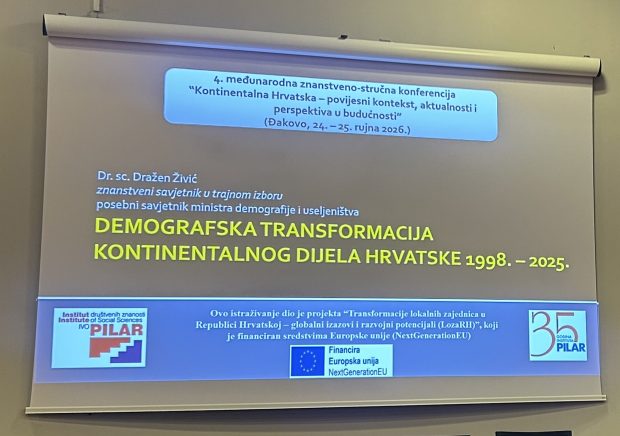
At the international scientific and professional conference Continental Croatia: Historical Context, Current Issues and Future Perspectives (4), held in Đakovo on 24 and 25 September 2026, three papers were presented as part of the LozaRH project
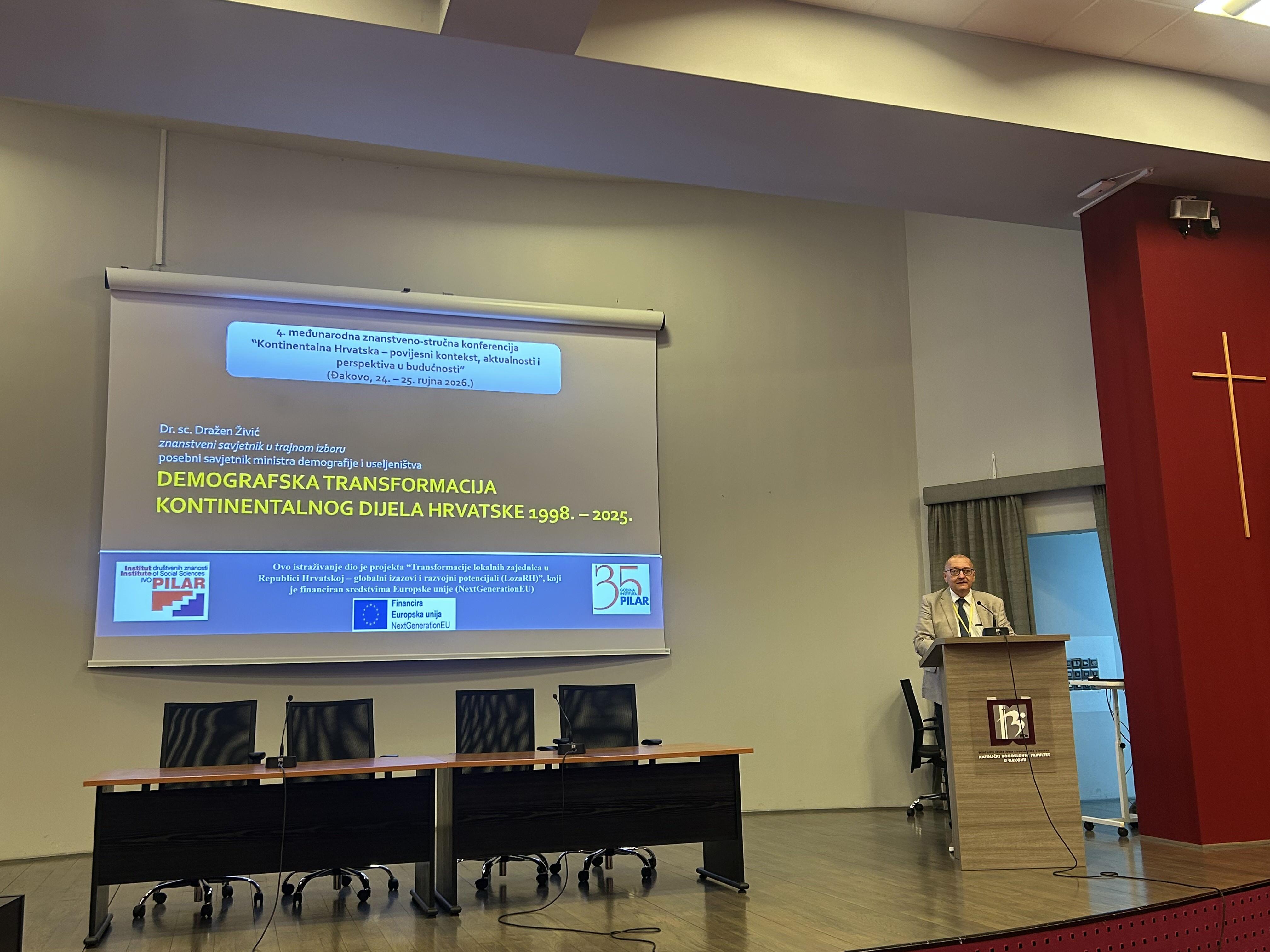
Dražen Živić, PhD, presented a paper entitled “Demographic Transformation of Continental Croatia (1998 – 2025)” in the Demography and Migration session. Based on official census, vital statistics, and migration data, the paper analysed overall population change, natural population change, and migration, identifying the direction, scale, and structure of the demographic balance. Attention was paid to the spatial and temporal differences in demographic dynamics between the Pannonian and Northern Croatia regions and the City of Zagreb, which constitute the NUTS 2 statistical regions of continental Croatia.
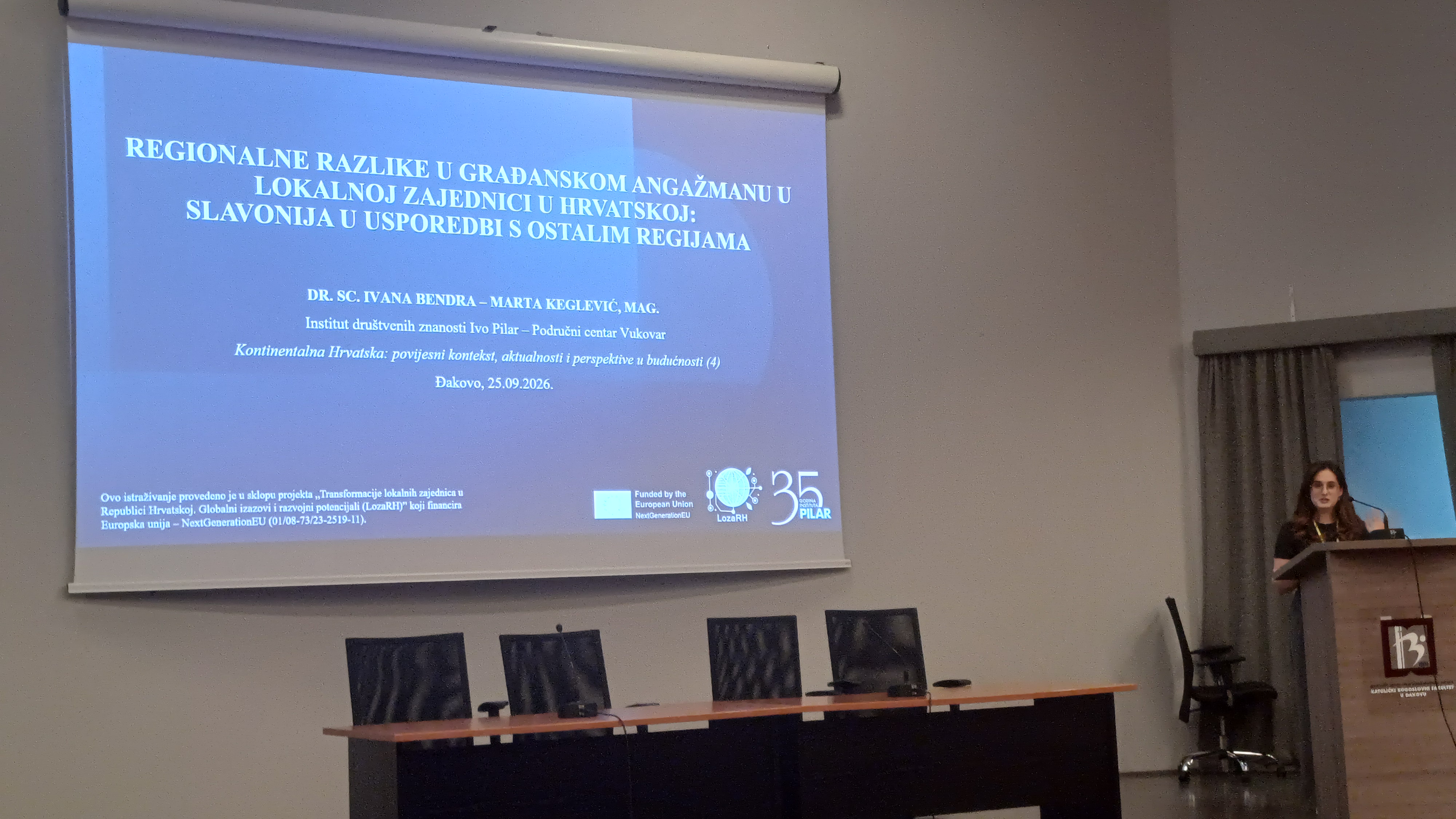
The remaining two papers were presented in the Society and Sustainable Development session. Ivana Bendra, PhD, and Research Assistant Marta Keglević presented a paper entitled “Regional Differences in Civic Engagement in Local Communities in Croatia: Slavonia Compared with Other Regions.” Based on quantitative data collected through a survey conducted in 2025, the authors analysed patterns of civic engagement and regional differences across its various dimensions. The findings point to a gap between civic attitudes and civic practice, that is, between citizens’ willingness to engage and their actual participation in local communities.
The third paper, entitled “The Impact of Traffic on the Quality of Life of Tovarnik Residents,” was authored by Mateo Žanić, PhD, Research Assistant Marta Keglević, and Sandra Cvikić, PhD. Based on findings from a qualitative study conducted in the second half of 2025, the paper examines how traffic affects the quality of life of Tovarnik residents. The research identified two key themes: experiences of mobility outside the settlement and perceptions of traffic within the settlement itself. The findings show that Tovarnik residents face problems related to traffic congestion, as well as challenges associated with transport marginalization.