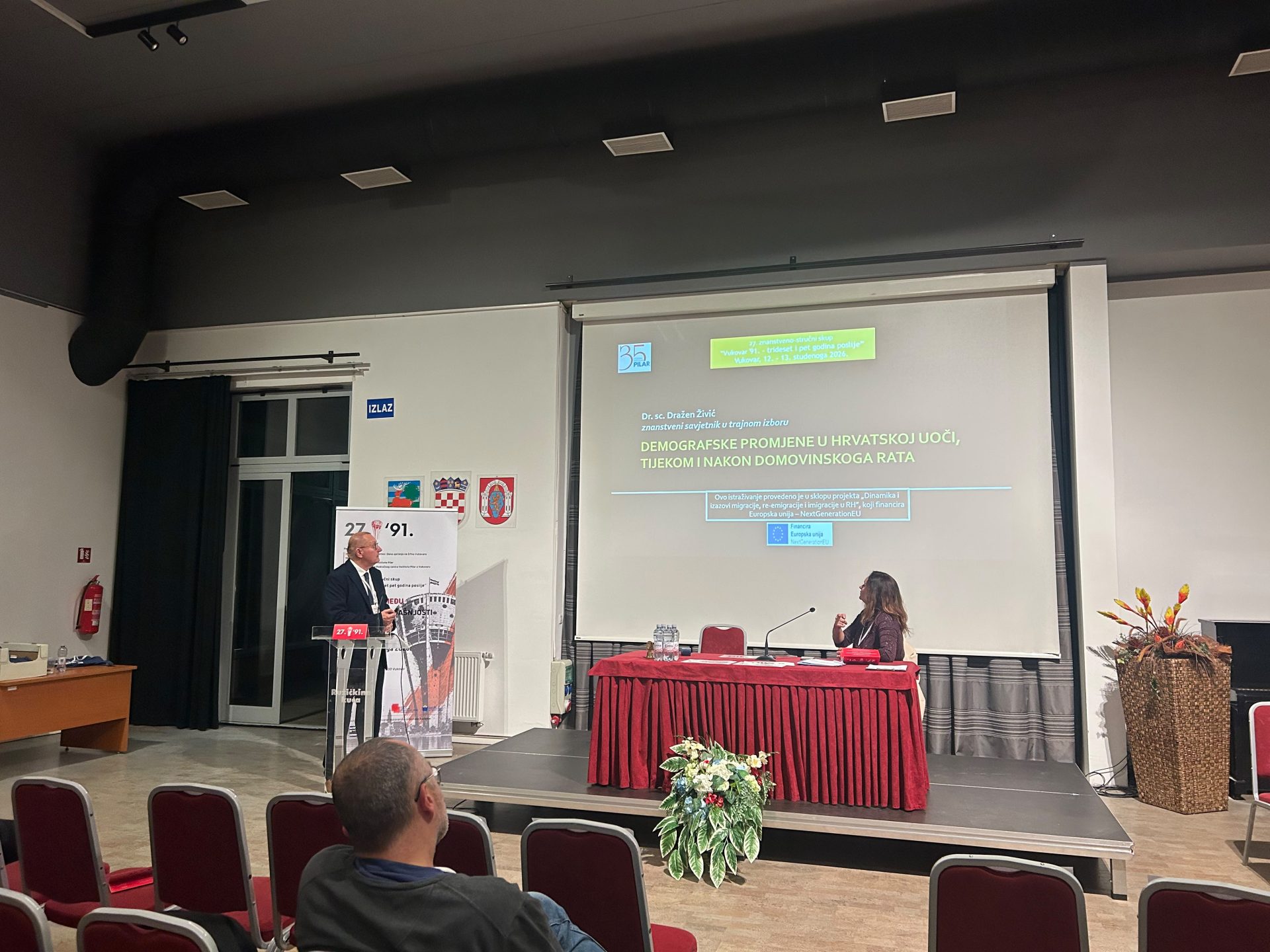
A Plenary Lecture at the 27th Conference Vukovar ’91 – Thirty-Five Years Later delivered by Dražen Živić, PhD; 12/11/2026
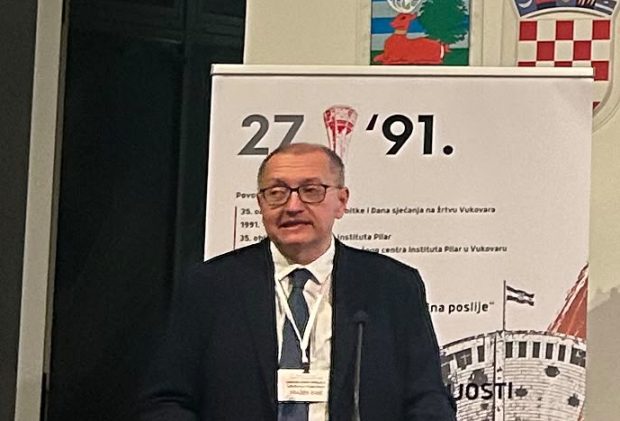
A plenary lecture at the 27th scientific-professional conference Vukovar ’91 – Thirty-Five Years Later (Vukovar Between the Past, Present, and Future) – held on November 12–13, 2026, in Vukovar – was delivered by Dražen Živić, PhD, a staff member at the Vukovar Regional Center of the Ivo Pilar Institute of Social Sciences. His presentation was titled “Demographic Changes in Croatia Before, During, and After the Homeland War”
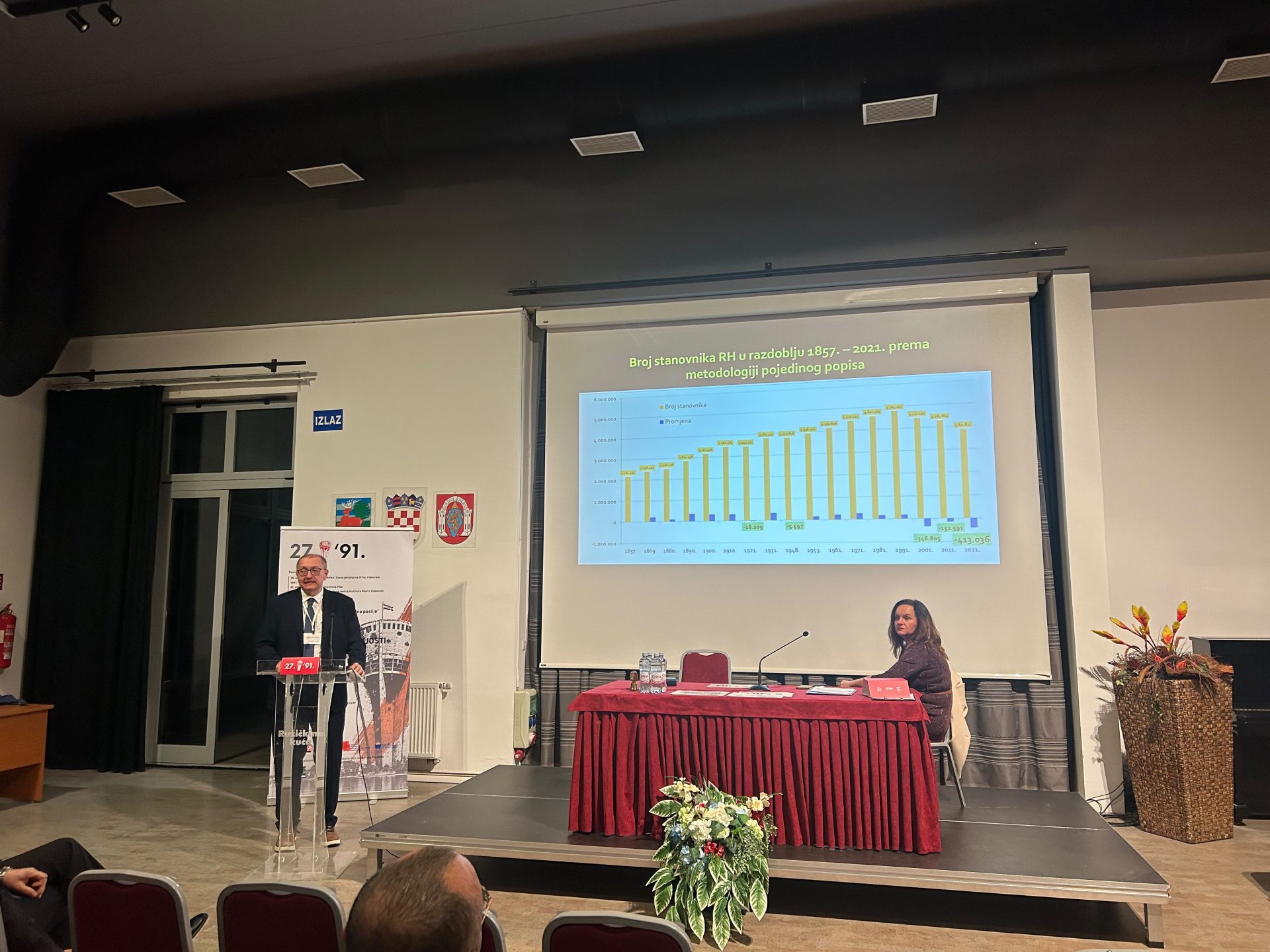
Dražen Živić, PhD, shared findings from the research project Dynamics and Challenges of Migration, Re-emigration, and Immigration in the Republic of Croatia (DinamiRH), which is funded by the European Union (NextGenerationEU). Over the last three intercensal periods (1991–2021), Croatia’s demographic development has been marked by radical shifts in population dynamics and structures—specifically, the emergence and intensification of general depopulation, alongside partial depopulation processes affecting both natural population change and migration-driven (mechanical) change. Structural-demographic indicators have also deteriorated, particularly regarding the biological and economic composition of the population. Furthermore, spatial population polarization has deepened, becoming a powerful driver of regionally unbalanced economic development. These downward demographic trends, at both the national and local levels, are increasingly significant factors influencing social (in)stability and the potential for sustainable development. Among the most significant external factors contributing to unfavorable trends in Croatia’s demographic landscape from the end of the 20th century through the first two decades of the 21st century, the Homeland War stands out; its demographic consequences – encompassing direct (war mortality), migratory, and indirect losses – triggered and accelerated depopulation processes due to their short-term and long-term effects.