TEEN-WELL and DigiLitA Project Findings Presented at EARA 2026; Utrecht, 18-21/08/2026
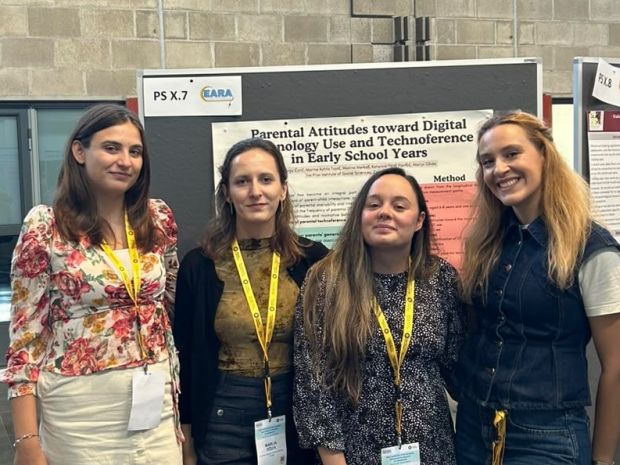
Members of the TEEN-WELL and DigiLitA project teams participated in the conference of the European Association for Research on Adolescence (EARA), held in Utrecht, Netherlands, from 18 to 21 August 2026
Two presentations were delivered as part of the TEEN-WELL project. Marija Džida, PhD, presented „Environmental Sensitivity and Adolescent Internalizing and Externalizing Problems“, co-authored by Andreja Brajša-Žganec, PhD, Maja Kućar, Tamara Bolić, and Gordana Keresteš, PhD. The study examined the association between environmental sensitivity and adolescents’ internalizing and externalizing problems, that is, their emotional and behavioural difficulties.
Tamara Bolić presented „Evaluating the Need Crafting Scale and Its Correlates Among Croatian Adolescents“, co-authored by Andreja Brajša-Žganec, PhD, Marija Džida, PhD, and Gordana Keresteš, PhD. The presentation reported findings on the psychometric properties of the Need Crafting Scale and examined how need crafting relates to various aspects of adolescent functioning and well-being.
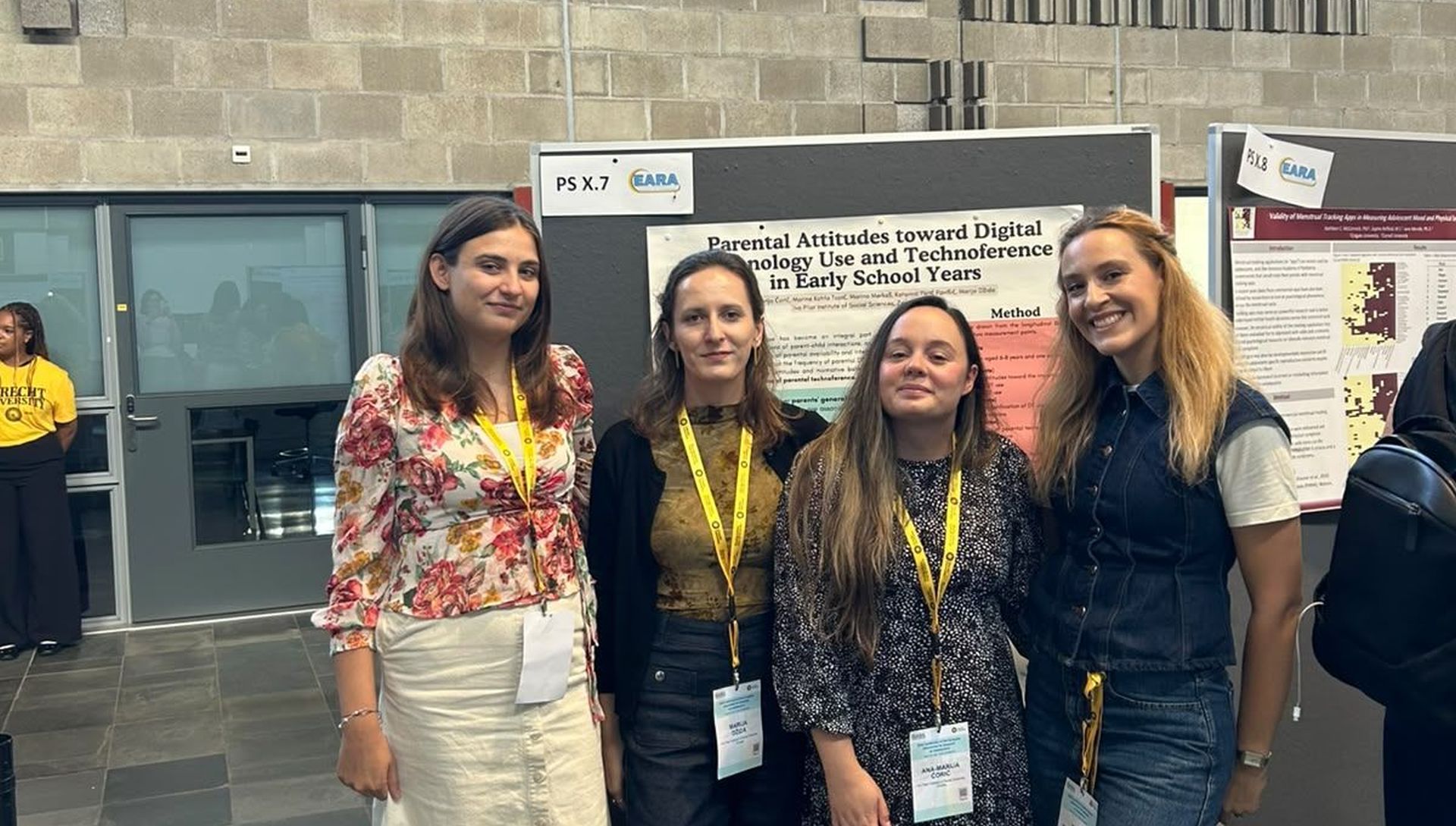
Research conducted within the DigiLitA project was presented through two posters. Ana-Marija Ćorić presented „Parental Attitudes Toward Digital Technology Use and Technoference in Early School Years“, co-authored by Marina Kotrla Topić, PhD, Marina Merkaš, Katarina Perić Pavišić, PhD, and Marija Džida, PhD. The study explored parents’ attitudes towards digital technology use and their association with technoference, the disruption of everyday family interactions caused by the use of digital devices, in families with children in the early years of primary school.
Maja Kućar Kveder presented „Executive Functions in Early School Years: Structure, Measurement, and Academic Correlates“, co-authored by Marina Kotrla Topić, PhD, Ana-Marija Ćorić, Andreja Brajša-Žganec, PhD, and Tihana Brkljačić, PhD. The study examined the structure and measurement of executive functions in the early school years, as well as their associations with academic outcomes.
Marija Džida, PhD, also contributed to the presentation of „Emotion Beliefs and Emotion Regulation in Daily Life: An ESM Study“, co-authored by Daria Dodan, Katarina Miletić, and Eske van Roekel, PhD as part of the EARA Collaborative Research Network initiative. Using the experience sampling method (ESM), the study examined beliefs about emotions and emotion-regulation strategies in everyday life, providing insight into these processes in participants’ natural daily environments.
Participation in the conference provided an opportunity to present the projects’ latest findings to the international scientific community, exchange knowledge and experiences, and connect with researchers working in related fields.