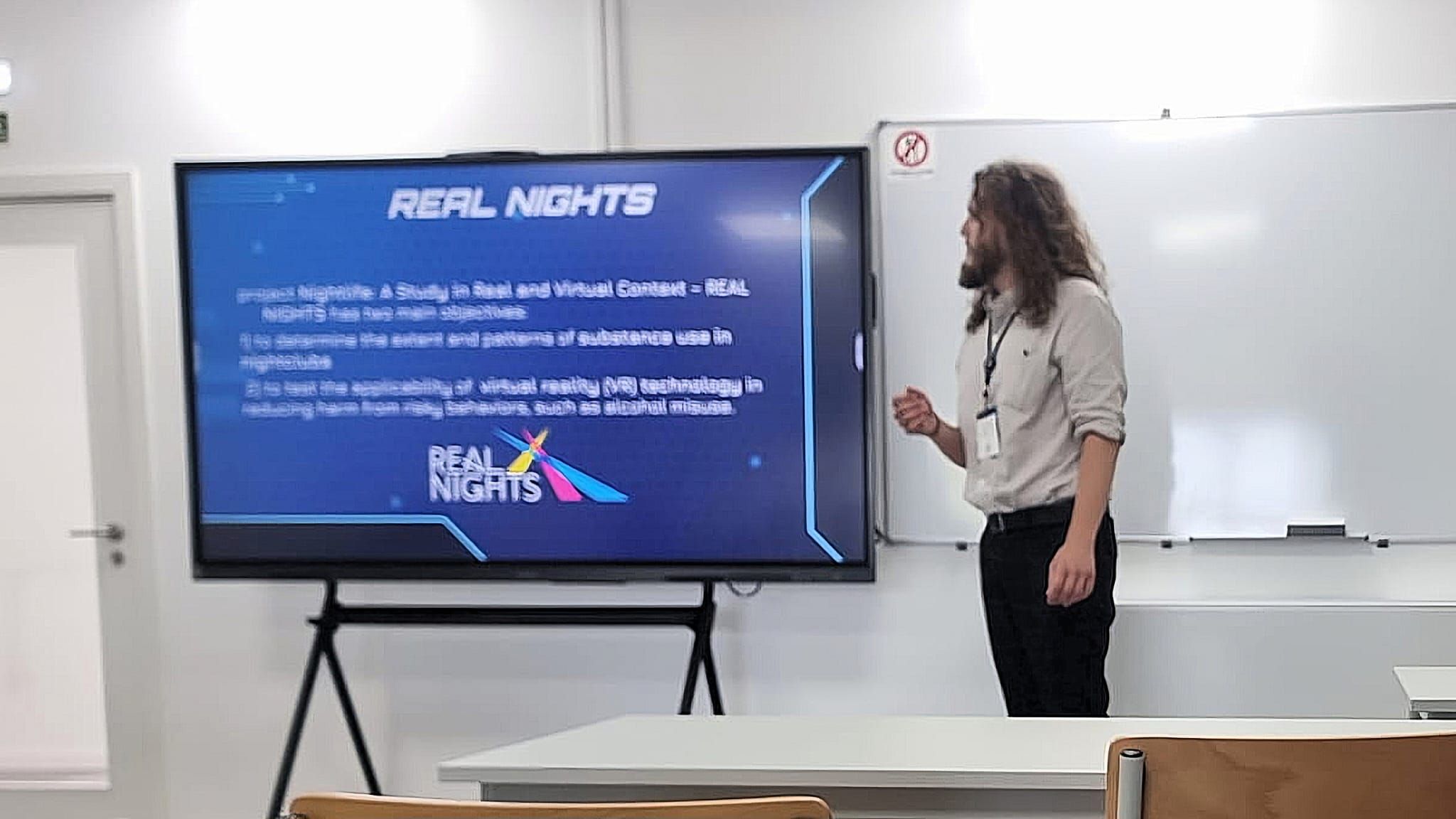
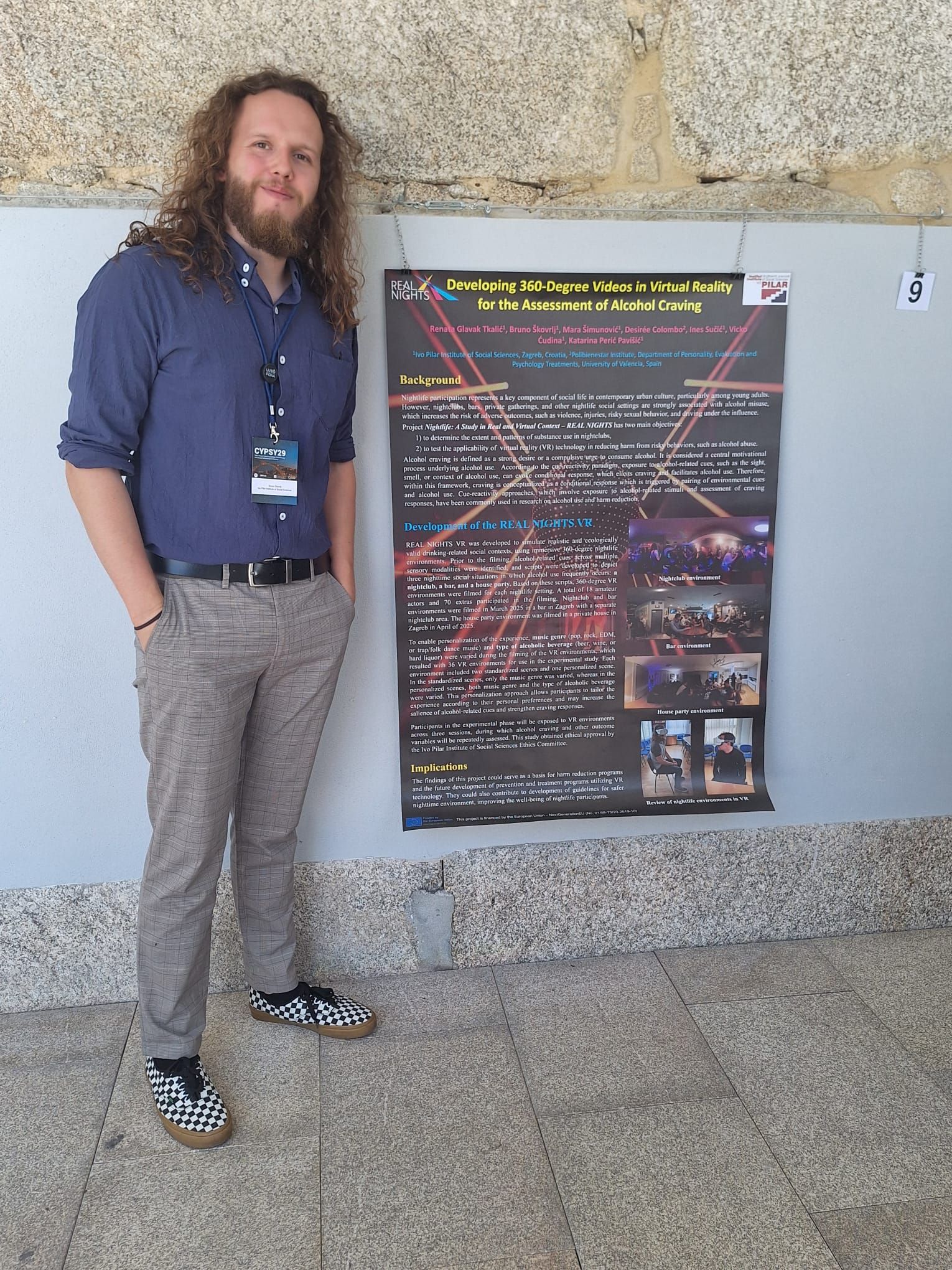
Research Assistant Bruno Škovrlj at the 29th Annual CyberPsychology, CyberTherapy, and Social Networking Conference (CyPsy 29); Porto, 30/6 – 2/7/2026
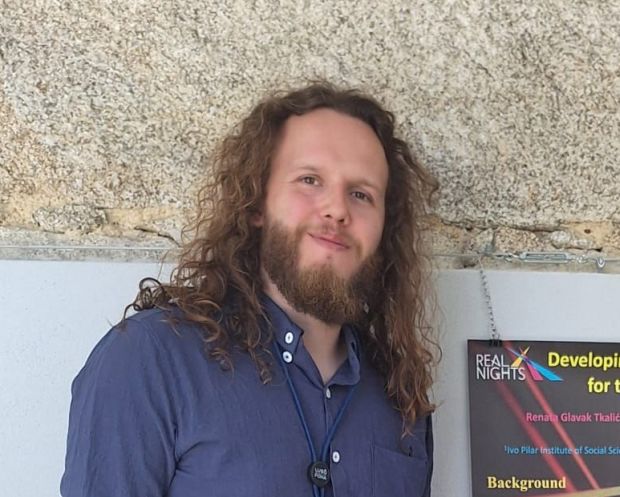
At the 29th Annual CyberPsychology, CyberTherapy, and Social Networking Conference (CyPsy 29), under the theme Human 5.0: Behaviour, Well-being and Ethical Tech, held in Porto, Portugal, from June 30 to July 2, 2026, and organized by the HEI-Lab Digital Human-Environment Interaction Lab at Lusófona University, the Interactive Media Institute, the Virtual Reality Media Centre, and Université du Québec en Outaouais, research assistant Bruno Škovrlj participated with two contributions (an oral presentation and a poster) created within the Nightlife: A Study in Real and Virtual Context – REAL NIGHTS project
The oral presentation, entitled „Alcohol Craving Assessment Using 360-Degree Videos in Virtual Reality: A Feasibility Study“ (co-authors: Renata Glavak Tkalić, PhD; Mara Šimunović, PhD; Desirée Colombo, PhD; Ines Sučić, PhD; Vicko Ćudina; and Katarina Perić Pavišić, PhD), included the findings of a feasibility study aimed at evaluating the applicability of the REAL NIGHTS VR immersive 360-degree video sin virtual reality for assessing alcohol craving.
The study included 23 participants, who were exposed to one randomly selected REAL NIGHTS VR environment (nightclub, bar, or house party). Following the VR exposure, participants reported their subjective alcohol craving, sense of presence in the virtual environment, and the occurrence of adverse symptoms. Participants also evaluated the realism, user-friendliness, and overall quality of the REAL NIGHTS VR intervention. The findings demonstrated satisfactory levels of presence and minimal occurrence of adverse symptoms. In addition, participants rated the intervention as user-friendly and moderately high in terms of realism and overall quality. These results support the suitability of the REAL NIGHTS VR intervention for use in the forthcoming experimental study investigating the effects of VR cue exposure on alcohol craving.
The poster presentation, entitled „Developing 360-Degree Videos in Virtual Reality for the Assessment of Alcohol Craving“ (co-authors: Renata Glavak Tkalić, PhD; Mara Šimunović, PhD; Desirée Colombo, PhD; Ines Sučić, PhD; Vicko Ćudina; and Katarina Perić Pavišić, PhD) described the process of designing and developing the REAL NIGHTS immersive VR environments. It also highlighted the methodological aspects of applying virtual reality technology in alcohol craving research.
Project Nightlife: A Study in Real and Virtual Context (REAL NIGHTS) is funded by the NextGenerationEU.