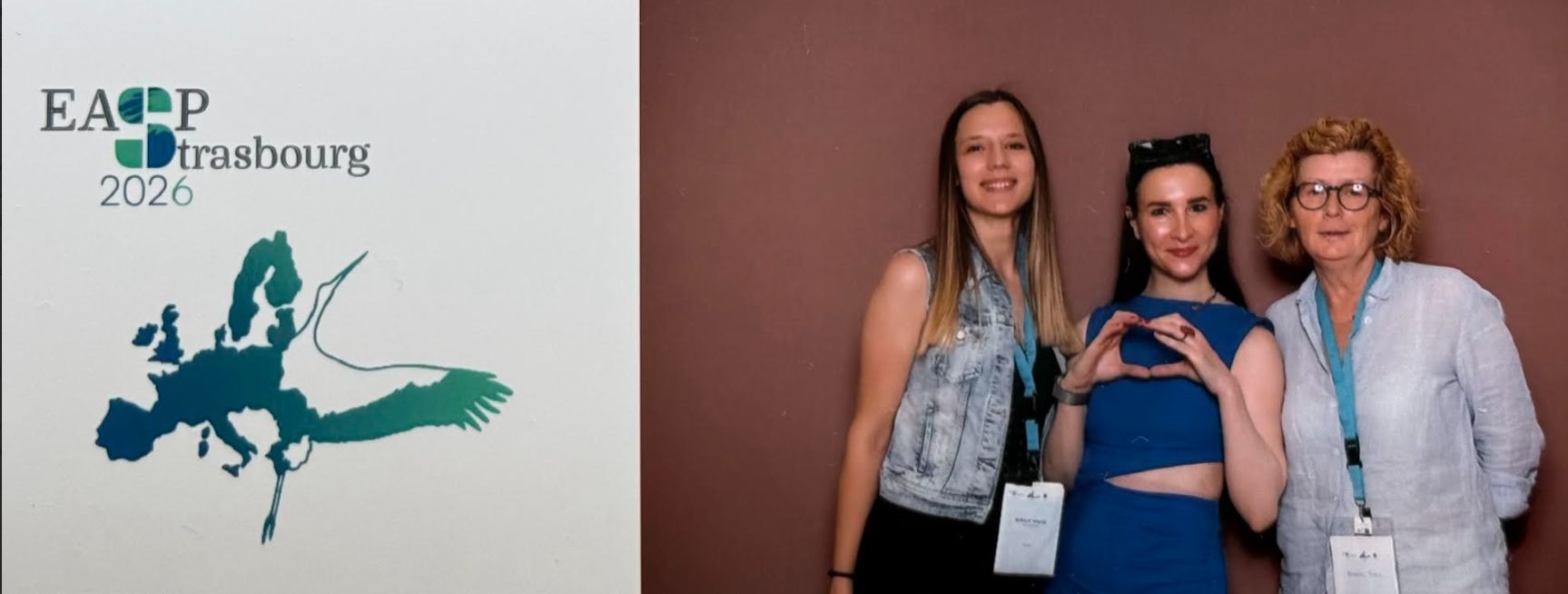
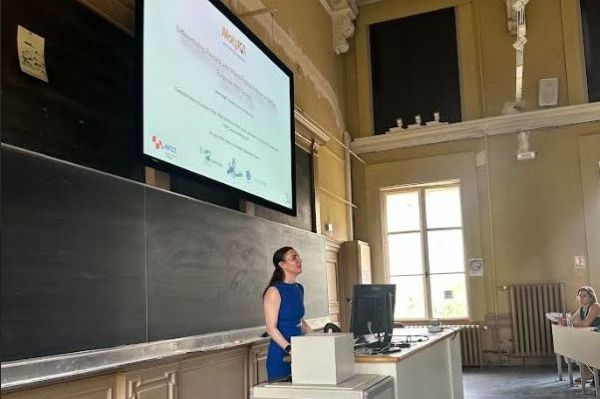
MotiKA team members at the General Meeting of the European Association of Social Psychology; Strasbourg, 30/06-04/07/2026

Marina Maglić, PhD, gave a blitz talk entitled „Differentiating Peaceful and Violent Political Efficacy in SIMCA: Evidence from Croatia“ at the pre-conference Collective Action in Complex Times: What Still Works, What Doesn’t, and Where to Next, held as part of the General Meeting of the European Association of Social Psychology (EASP). The study was conducted in collaboration with Tomislav Pavlović, PhD, and Renata Franc, PhD
Structural equation modelling within the SIMCA framework revealed a clear matching pattern: perceived efficacy of peaceful action was the main predictor of activist intentions, whereas perceived efficacy of violent action was the main predictor of intentions to engage in violent action. A smaller interaction effect was also found, whereby the association between perceived efficacy of peaceful action and activist intentions was stronger among participants who also perceived violent action as effective.
The findings indicate that distinguishing between the perceived efficacy of different forms of action may be valuable in collective action research.
During the poster session at the EASP General Meeting, Marina Maglić, PhD, also presented the study „What Counts as Effective Collective Action? – A Qualitative Study among Active and Passive Citizens in Croatia“, co-authored with Tomislav Pavlović, PhD, and Renata Franc, PhD.
The study was based on a thematic analysis of 72 semi-structured interviews with active members of civil society organisations and citizen initiatives, as well as less active citizens. Its aim was to examine how citizens understand the effectiveness and ineffectiveness of collective action in relation to different objectives, such as influencing political decisions, mobilising new participants, increasing visibility and fostering empowerment, as well as in relation to different forms of action.
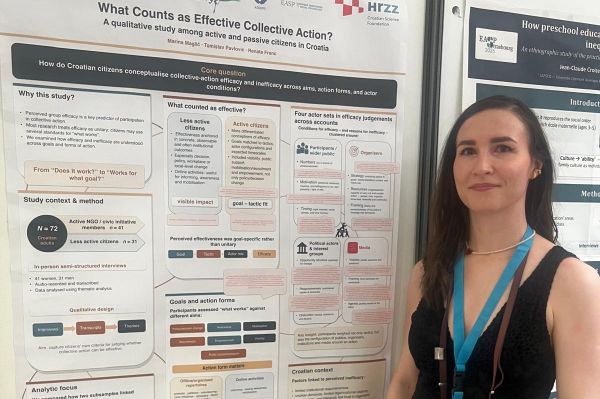
The results showed that less active citizens were more likely to associate effectiveness with concrete and immediately visible outcomes, whereas active citizens expressed more elaborate understandings and linked particular action strategies to the objectives for which they were best suited. Online activities were an exception, as less active participants also recognised their usefulness for disseminating information, raising awareness and mobilising citizens.
The factors contributing to the effectiveness or ineffectiveness of collective action were grouped around four sets of actors: participants themselves and the wider public, organisers, political actors and interest groups, and the media. The findings indicate that citizens assess ‘what works’ depending on the objective of the action, the strategy selected and the interplay between the different actors involved in collective action.