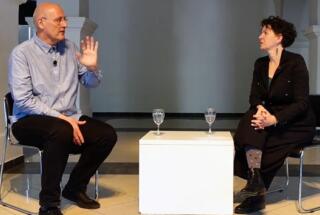
Marina Maglić, PhD, on climate change from a social science perspective in Glas Slavonije; 11/07/2026

As part of its weekly feature ‘What Is Happening to the Climate?’, the Magazine section of Glas Slavonije featured Marina Maglić, PhD, of the Pilar Institute discussing climate change from a social science perspective – how citizens understand it, how they respond to it affectively and politically, and what this means for public communication and social action
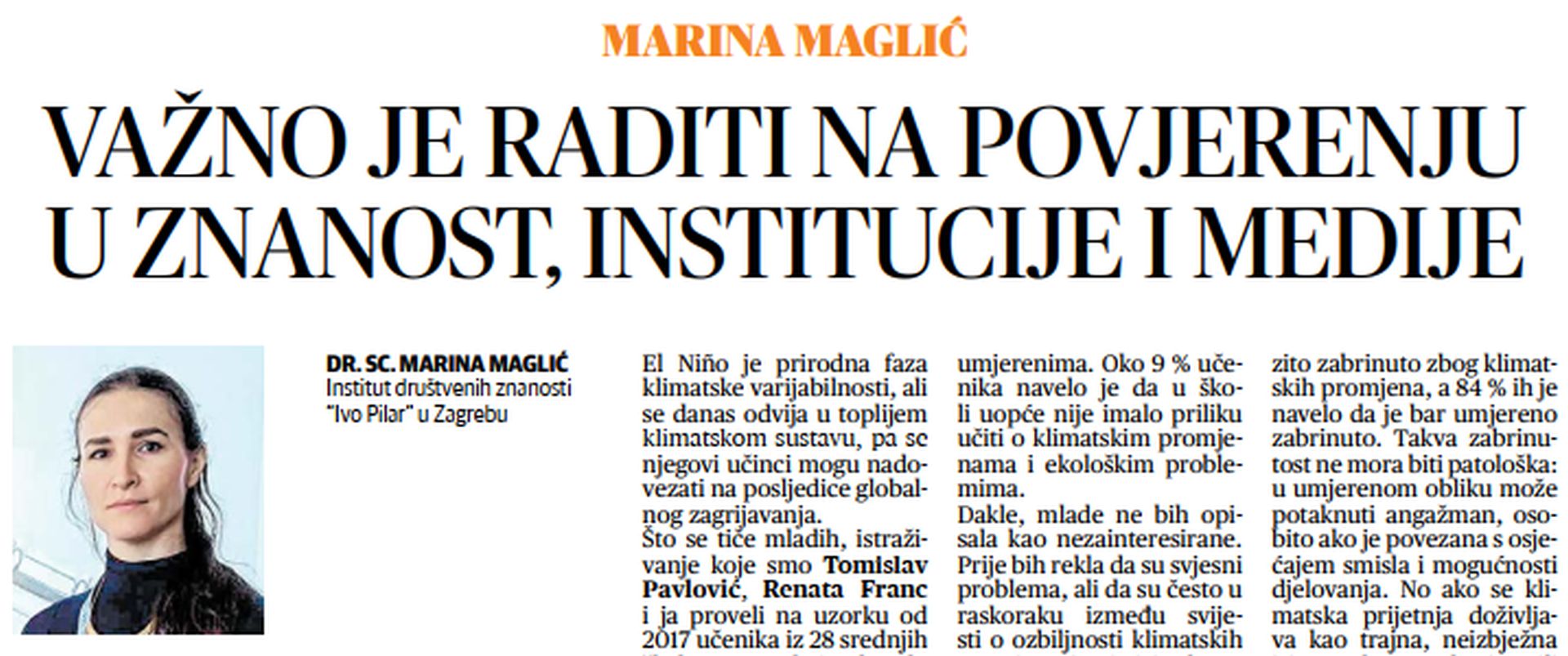
Marina Maglić, PhD, emphasised the importance of distinguishing between two issues: climate change itself, which is supported by a very strong body of scientific evidence, and the way it is communicated in public and in the media. Sensationalist and overly dramatic framing, as well as the politicisation of climate change, do not contribute to a sound understanding of the issue. She discussed the importance of distinguishing short-term weather fluctuations from long-term climate trends, the scientific consensus on the human contribution to global warming, and the role of the media, disinformation and cognitive processes in shaping public attitudes.
She also addressed young people’s attitudes, stressing that she would not characterise them as uninterested. Findings from research conducted with Tomislav Pavlović, PhD, and Renata Franc, PhD, indicate that, on average, the secondary-school students included in the study were aware of the importance of climate change and expressed a willingness to engage in pro-environmental behaviour. At the same time, she noted that young people often find themselves caught between an awareness of the seriousness of the problem and a sense that they do not know what practical steps they can take or whether their actions will make a difference.
Turning to the politicisation of climate change, Marina Maglić, PhD, stressed that politicians can influence public debate, trust in science and climate policy, but they cannot change what the scientific evidence shows. In democratic societies, it is legitimate to debate which policies are most effective, equitable and feasible. Problems arise when the rejection of well-established facts, the spread of disinformation and the encouragement of ideological divisions create the false impression that the scientific community is fundamentally divided over whether global warming is caused by human activity.
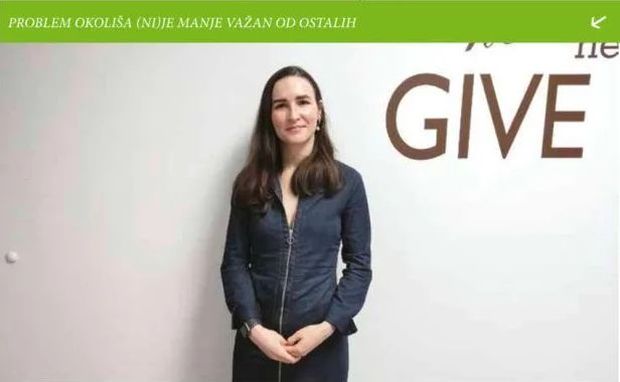
Climate change is not only a matter for the natural sciences, but also a social issue. It raises questions of trust, inequality, political will, collective action and intergenerational justice. Individual habits are not unimportant, but the most substantial changes require systematic and coordinated action by institutions, industries, cities, states and the international community. When citizens see that their actions are meaningful, that clear policies are in place and that institutions are doing their part, they are more likely to become involved.
These issues are among those examined by researchers at the Pilar Institute as part of the project DISINFO climate – The Role of Dispositions and Information Exposure in the Context of Climate Change.